To walk through one of Thailand's historical parks is to read the country's history in stone. These vast archaeological sites — ruined cities of chedis, prangs and weathered Buddhas, set among lotus ponds and ancient trees — are where the Thai story is most legible, and visiting them in the right order is like turning the pages of a thousand-year book. Several are UNESCO World Heritage Sites, all are extraordinary, and together they trace the rise and fall of the kingdoms that became modern Thailand. Here they are, arranged not by fame but by chronology — the way the history itself unfolded.
Before Thailand: The Khmer Temples of the Northeast
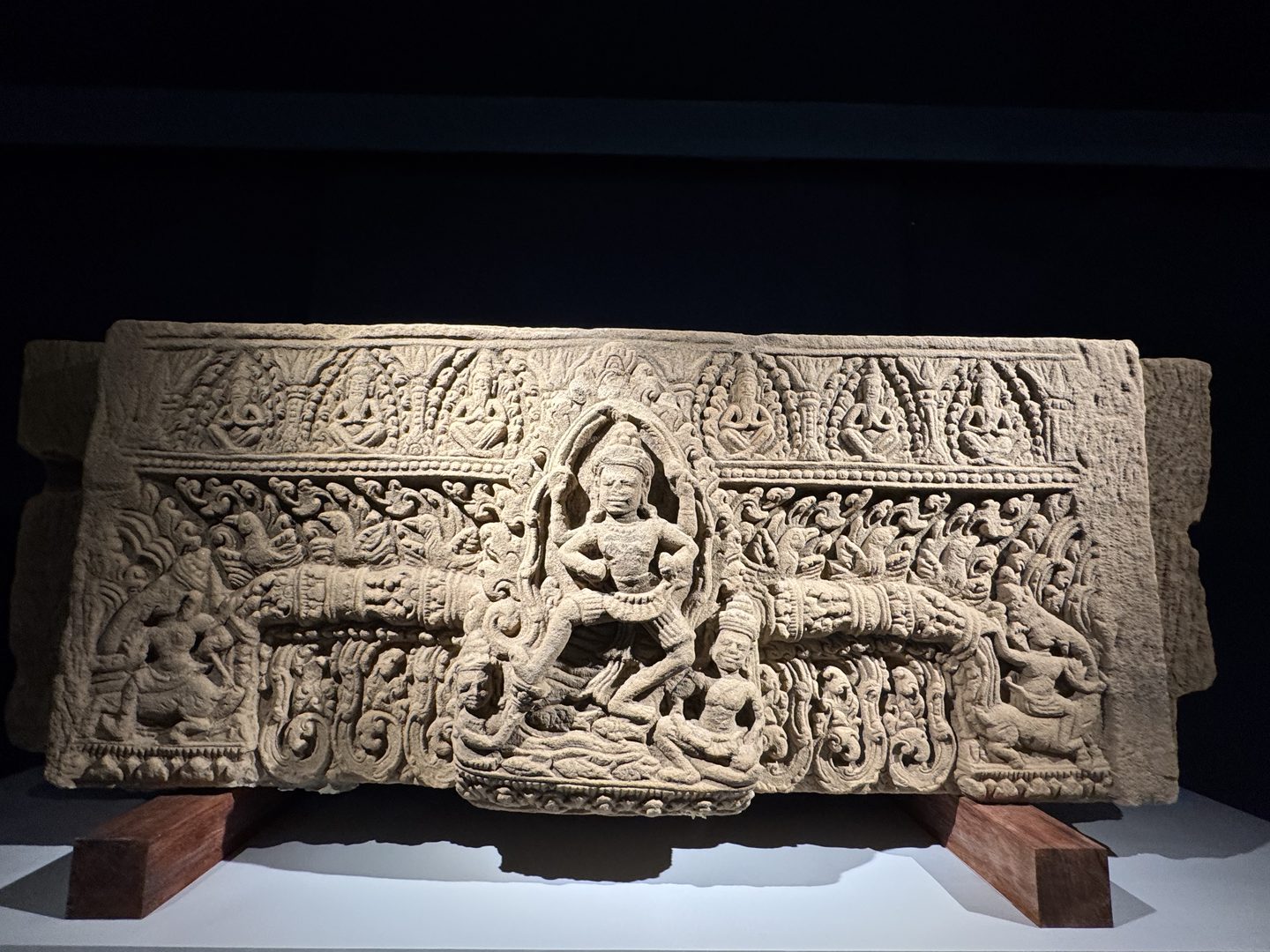
Long before there was a Thai kingdom, the Khmer Empire of Angkor ruled much of this land, and its greatest monuments in Thailand stand in the Isan northeast. Phanom Rung, in Buriram, is the masterpiece: a magnificent sandstone temple built between the 10th and 13th centuries atop an extinct volcano, dedicated to the Hindu god Shiva and designed as an earthly model of Mount Kailash, his cosmic home. A grand ceremonial promenade and naga bridges lead up to a sanctuary whose carvings rival anything at Angkor — and a few times each year, the rising or setting sun aligns perfectly through all fifteen of its doorways, a spectacle that draws thousands. Not far away, Phimai Historical Park in Nakhon Ratchasima preserves one of the largest Khmer sanctuaries in the country, connected to Angkor by an ancient royal road and thought to have influenced Angkor Wat's design. A few hundred metres from the ruins, the recently and beautifully refurbished Phimai National Museum is a genuinely world-class companion to the site — its airy, elegantly curated halls and grounds hold Thailand's largest collection of Khmer art, the finest hundred or so carved lintels and pediments anywhere on public display, including the colossal three-metre lintels from Phimai's own gateways and a moving sculpture of the great King Jayavarman VII. It is the single best place to understand the artistry of the stones, and reason enough in itself to make the journey. Quiet, uncrowded and superbly restored, this pair is essential to understanding the deep Khmer layer beneath Thai civilisation.
The Newest Wonder: Si Thep and the Dvaravati
Between the Khmer monuments and the first Thai kingdom lies a civilisation many travellers have never heard of — and Thailand's newest and most exciting historical park. Si Thep, in Phetchabun, was a great moated city-state of the Dvaravati, the Mon-founded culture that flourished across central Thailand from roughly the 6th to the 11th centuries, blending Indian-derived Hinduism and Buddhism into a distinctive local style now called the "Si Thep School of Art." Inhabited for a millennium before being abandoned as Sukhothai and Ayutthaya rose, its twin-town site of laterite monuments, prangs and the colossal nearby Khao Klang Nok mound was inscribed as a UNESCO World Heritage Site in September 2023 — Thailand's seventh, and its first new cultural listing since Ban Chiang in 1992. The recognition triggered a surge of domestic visitors, so it can be busy at weekends, and English signage remains thin; but for anyone who wants to understand the deep, pre-Thai foundations of the country's culture, Si Thep is a revelation, and a chance to see a world-class site before the world fully arrives.
The First Thai Kingdom: Sukhothai and Its Sisters
If Thailand has a birthplace, it is Sukhothai — the "Dawn of Happiness," capital of the first major Thai kingdom from the 13th century, and the single most important historical park in the country. UNESCO-inscribed in 1991, its central zone is a serene, beautifully maintained expanse where the lotus-bud chedi, the graceful "walking Buddha" and the codified Thai script all first emerged. Where Ayutthaya is dense and urban, Sukhothai is open and contemplative — wide sight lines, reflecting pools, the great seated Buddha of Wat Si Chum gazing through its narrow chamber, the central glory of Wat Mahathat. Explored by bicycle at dawn or dusk, when the light gilds the ruins, it is one of the most magical experiences in Thailand. Most visitors meet Thai history backwards, beginning in Bangkok; Sukhothai is where it actually begins.
"Most visitors meet Thai history backwards. Sukhothai is where it actually begins."
Two sister cities complete the UNESCO listing. Si Satchanalai, 55km north on the Yom River, was the domain of the Sukhothai crown prince — a larger, far quieter park of elephant-girdled chedis (the magnificent Wat Chang Lom) and ancient kiln sites, where you may have the ruins almost to yourself. Kamphaeng Phet, to the south, was the kingdom's fortified military outpost, its towering laterite temples and giant standing Buddhas set in peaceful woodland that sees few tourists. Both reward those willing to venture beyond the headline site.
The Golden Age: Ayutthaya
If Sukhothai is Thailand's birth, Ayutthaya is its imperial zenith. Founded in 1350 at the confluence of three rivers, the Kingdom of Ayutthaya grew over four centuries into one of the largest and richest cities on earth, a cosmopolitan trading capital that drew merchants from Persia, China, Japan and Europe — until the Burmese army razed it in 1767, ending the kingdom and leaving the haunting ruins we see today. Just over an hour from Bangkok and easily done as a day trip, the UNESCO park is a sprawl of some forty temples: the royal Wat Phra Si Sanphet with its three restored chedis; Wat Chaiwatthanaram, a Khmer-style riverside masterpiece glorious at sunset; Wat Ratchaburana with its climbable crypt; and, most famous of all, Wat Mahathat, where a serene stone Buddha head, embraced by the roots of a Bodhi tree, has become the indelible image of Thailand's lost capital. The beheaded Buddhas throughout are a sobering reminder of the city's violent end.
How to Plan Your Journey Through Time
The most rewarding way to see these is as a chronological circuit rather than isolated day trips. The classic northern route runs Bangkok → Ayutthaya → Sukhothai (with Si Satchanalai and Kamphaeng Phet) → Chiang Mai, climbing back through time from the Ayutthaya golden age to the Sukhothai dawn and on to the Lanna north — a journey of seven to ten hours' travel all told, best spread over several days with overnight stays so you catch the golden-hour light. The Khmer parks of the northeast, Phanom Rung and Phimai, sit on a different axis and pair naturally with an Isan trip, while Si Thep lies off the northern route in Phetchabun, a worthwhile detour for the historically minded. A few universal notes: go early or late to beat both the heat and the crowds; rent a bicycle, the perfect pace for these dispersed sites; cover shoulders and knees, as these remain sacred places; visit the on-site national museums (especially Ramkhamhaeng at Sukhothai and Chao Sam Phraya at Ayutthaya) for context that transforms the ruins from picturesque to meaningful; and be aware that foreigner admission is typically higher than the local rate. Above all, give them time. These are not photo stops but the chapters of a civilisation — and read in order, they tell one of the great stories of Southeast Asia.